
Properties Restored After Serious Water Events
Water Damage Restoration in Waco for homes and businesses affected by leaks, flooding, or plumbing failures
Lone Star Flood Restoration handles water damage restoration when leaks, storms, or failed plumbing systems flood interior spaces and threaten structural integrity. The service addresses standing water, saturated building materials, and the hidden moisture that leads to warping, rot, and microbial growth if left untreated. You'll see immediate extraction followed by targeted drying that brings materials back to safe moisture levels before secondary damage occurs.
Water damage restoration involves emergency extraction to remove standing water, followed by industrial dehumidification and air movement to dry structural components like subflooring, wall cavities, and ceiling assemblies. Moisture detection equipment tracks readings in materials over multiple days to confirm drying is complete, not just surface-level. This process prevents the buckling floors, peeling paint, and compromised framing that result when water remains trapped inside building assemblies.
Schedule an assessment to identify the full extent of moisture intrusion and develop a complete drying plan.
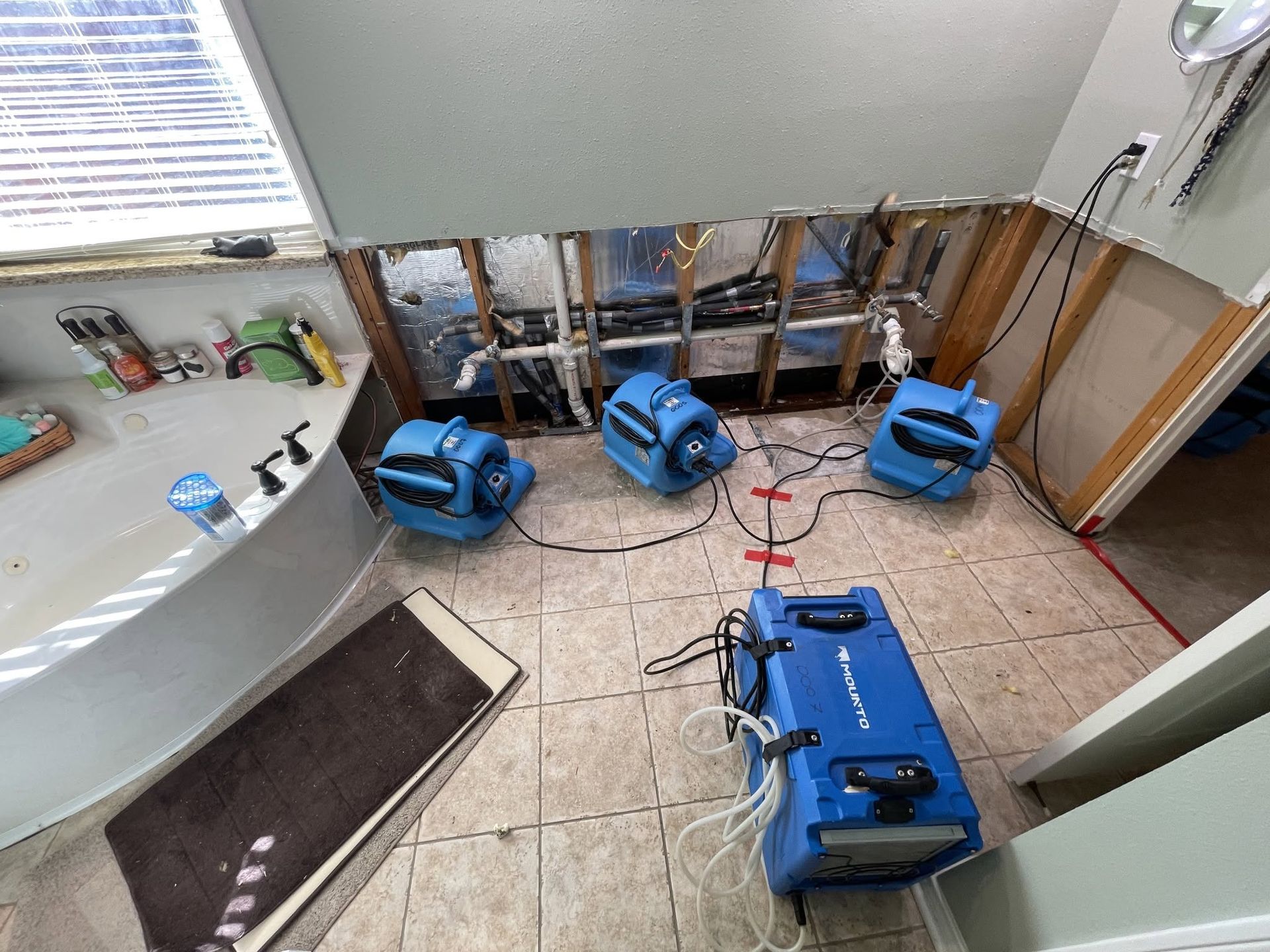
What Proper Water Damage Restoration Requires
Emergency water extraction uses truck-mounted pumps and portable extractors to remove standing water from floors, carpets, and furnishings within the first hours after discovery. Structural drying follows with commercial-grade dehumidifiers and air movers positioned to create airflow through wet materials, pulling moisture out of wood, drywall, insulation, and concrete. Moisture mapping with thermal imaging and pin-type meters identifies hidden saturation behind walls and under flooring that isn't visible during a walk-through.
Once drying equipment runs for several days and moisture readings drop to acceptable levels, you'll notice floors that no longer feel spongy underfoot, walls that aren't cool or damp to the touch, and air that doesn't carry the musty odor of trapped moisture. Materials return to their pre-loss condition without the swelling, staining, or structural weakening that happens when water sits too long. Documentation of moisture levels throughout the process provides a clear record that drying standards were met.
Water damage cleanup also includes removing debris, cleaning affected surfaces, and applying antimicrobial treatments where contamination is present. Complete property restoration may involve drywall replacement, flooring reinstallation, and repainting once all structural components reach stable moisture levels. The timeline depends on the extent of saturation, the types of materials affected, and how quickly drying equipment is deployed after the initial water event.
Questions Before Starting Your Restoration
Water damage situations vary widely depending on the source, volume, and duration of exposure, so property owners in Waco often ask about process details before work begins.
How quickly does water extraction need to start after flooding occurs?
Extraction should begin within the first 24 to 48 hours to prevent materials from absorbing additional moisture and to reduce the risk of microbial growth, which accelerates rapidly once organic materials stay wet beyond that window.
What does moisture detection involve during the restoration process?
Moisture meters measure water content in wood, drywall, and concrete at multiple points throughout drying, with readings compared against baseline standards to confirm when materials have returned to normal levels and equipment can be removed.
Why does structural drying take several days even after standing water is gone?
Building materials absorb water deeply into their core, and surface drying doesn't mean interior moisture has evaporated; dehumidifiers and air movers need continuous operation to pull moisture from within wall cavities, subfloors, and ceiling assemblies where airflow doesn't naturally reach.
What happens if hidden moisture isn't addressed during cleanup?
Water trapped inside walls or under flooring continues to degrade materials, causing wood rot, adhesive failure, and conditions that support mold colonization, often requiring more extensive repairs months later than if proper drying had been completed initially.
How does water damage restoration differ after a burst pipe versus a roof leak?
Burst pipes typically release clean water under pressure that spreads quickly across floors, while roof leaks introduce water slowly over time and may carry debris or contaminants from the roof surface, affecting both the drying approach and the need for sanitization during cleanup.
Lone Star Flood Restoration provides moisture monitoring and complete structural drying to bring properties back to stable conditions after water intrusion. Request an evaluation to document current moisture levels and outline the restoration timeline for your specific situation.
