
Interior Spaces Dried After Plumbing Failures
Burst Pipe Water Damage Cleanup in Waco for properties where broken or frozen pipes flood walls, ceilings, and floors
A burst supply line releases pressurized water continuously until the main valve shuts off, flooding rooms rapidly and forcing water into wall cavities, ceiling assemblies, and subfloor spaces through any available gap. The damage spreads vertically and horizontally as water follows gravity and seeps through building material seams, saturating areas far from the actual pipe failure. Lone Star Flood Restoration responds to burst pipe incidents with water removal, moisture detection in hidden spaces, and structural drying that prevents the rot, mold, and material failure that follow when water stays trapped inside building assemblies.
Burst pipe cleanup involves extracting standing water from floors and furnishings, then using moisture meters and thermal imaging to locate saturation behind drywall, under flooring, and within ceiling cavities where water traveled from the break point. Drying equipment targets those hidden areas with focused airflow and dehumidification, bringing moisture levels down before materials degrade or support microbial colonization.
Request a detailed moisture assessment to identify all affected building areas and confirm the full scope of drying required.
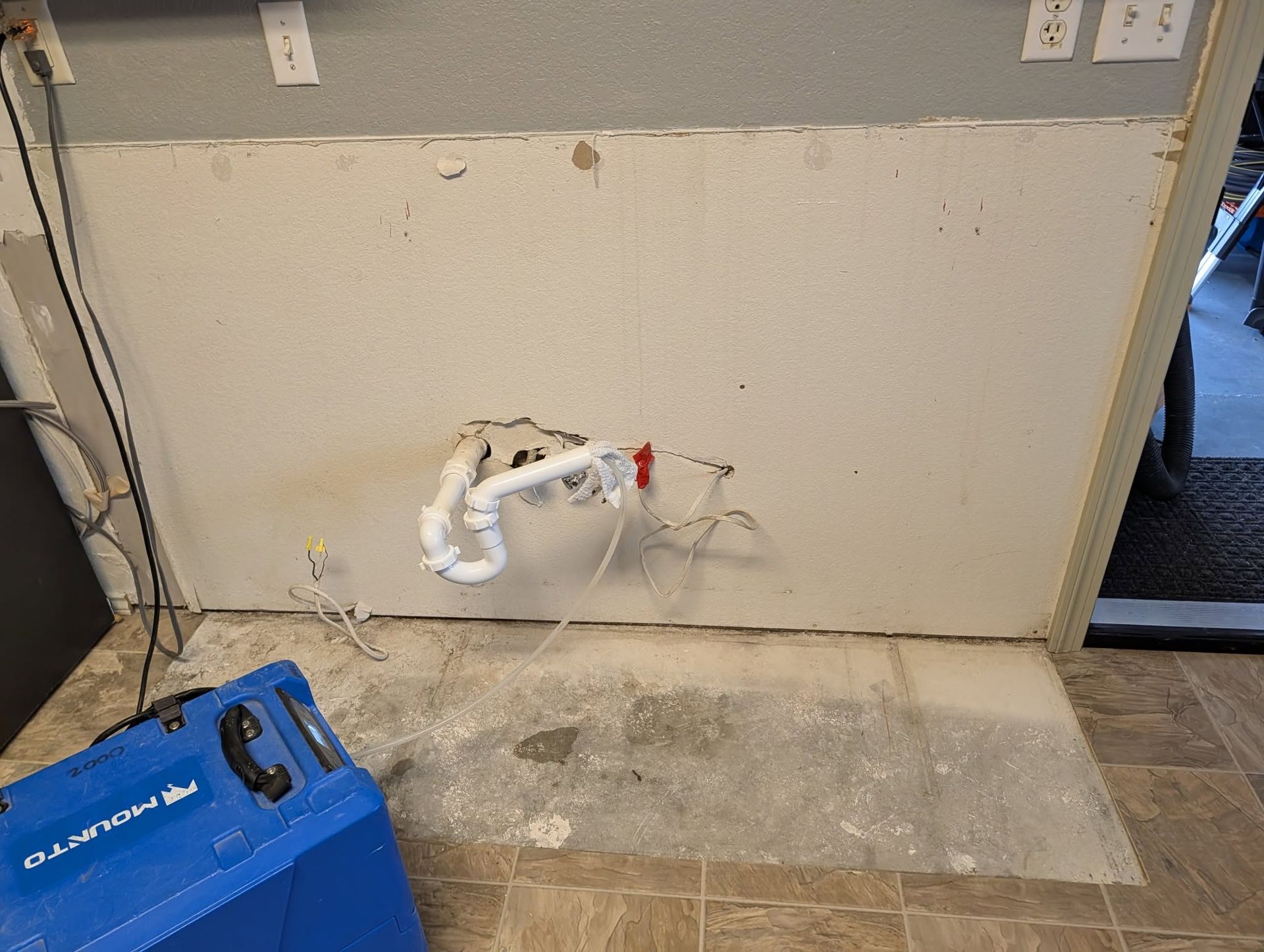
What You Notice Once Burst Pipe Cleanup Is Finished
Water removal starts by extracting pooled water from all visible surfaces, followed by moisture mapping that reveals where water migrated through wall studs, floor joists, and ceiling drywall after the pipe failed. Drying equipment then runs continuously for several days, with moisture readings taken at multiple points to track progress and confirm when materials reach stable levels. Mold prevention involves maintaining airflow and low humidity during drying to prevent spore germination on damp organic surfaces like wood and paper-faced drywall.
After drying finishes and equipment is removed, walls feel solid and room-temperature rather than cool and damp, floors no longer flex or squeak from swollen subflooring, and ceilings don't show water staining or sagging from saturated insulation above. Materials return to their pre-incident condition without the warping, peeling paint, or separating seams that result when moisture remains trapped. Interior air loses the musty smell that develops when wet building materials stay damp for extended periods.
Structural repairs may include replacing drywall sections that remained wet too long, reinstalling baseboards removed for wall cavity drying, and refinishing floors if water caused surface damage before extraction. The extent of rebuilding depends on how quickly water was stopped, how long materials stayed saturated, and whether hidden moisture was identified and dried before causing permanent damage.
What Property Owners Usually Ask
Burst pipe situations create urgent concerns about hidden damage and the steps needed to prevent long-term problems.
How do you locate water that soaked into walls after a pipe bursts?
Thermal imaging cameras detect temperature differences between wet and dry building materials, showing cool spots where water has saturated insulation or pooled behind drywall, while pin-type moisture meters measure water content directly by penetrating surface materials.
Why does drywall sometimes need replacement even after drying equipment runs?
Drywall that stays saturated beyond 48 hours often loses structural integrity as the gypsum core softens and paper facing delaminates, and contamination from pipe contents or microbial growth may make cleaning insufficient, requiring removal rather than risking future problems.
What prevents mold growth during the drying process after burst pipe flooding?
Rapid moisture reduction through dehumidification keeps relative humidity below levels that support spore germination, while air movers create surface drying that prevents colonization on damp materials during the days required for complete structural drying.
How long does it take to dry a wall cavity after a pipe breaks inside it?
Wall cavity drying typically requires three to five days of continuous air movement and dehumidification, with exact timing dependent on insulation type, water volume, and whether drywall is removed to allow direct airflow or dried in place through slower vapor diffusion.
What happens if water from a burst pipe reaches electrical fixtures?
Electrical components require inspection and often replacement after water contact because moisture can corrode connections, damage insulation, and create shock or fire hazards even after visible water dries, particularly in outlets, switches, and junction boxes that trapped water inside.
Lone Star Flood Restoration provides complete moisture detection and structural drying after burst pipe incidents, including documentation of affected areas and drying progress. Call (254) 600-9907 to begin water removal and prevent secondary damage at your property.
