
Damaged Spaces Rebuilt to Original Condition
Water Damage Repair & Reconstruction in Waco for properties requiring finish replacement and structural rebuilding after mitigation completes
Drywall replacement, flooring reinstallation, and trim repair follow after extraction and drying eliminate moisture from structural components, restoring rooms to pre-loss appearance using materials that match existing finishes in texture, color, and quality. Lone Star Flood Restoration handles complete reconstruction in Waco for properties where water damaged walls, ceilings, flooring, and built-in features beyond the scope of surface cleaning or minor patching. Reconstruction begins only after moisture meters confirm framing, subfloors, and sheathing have dried to safe levels—wood content below 15 percent and concrete below 4 percent surface moisture—preventing finish failure caused by trapped moisture that continues evaporating after new materials are installed.
Drywall replacement involves removing water-damaged panels to the nearest stud beyond visible staining, installing new gypsum board, taping and finishing seams with joint compound applied in multiple coats, and sanding to a smooth surface ready for primer. Flooring replacement includes removing compromised materials, inspecting and drying subfloors, and installing new hardwood, tile, vinyl, or carpet selected to match adjacent undamaged areas. Trim and baseboard repair restores crown molding, door casings, and baseboards removed during drying or damaged by prolonged water contact, with new pieces cut, fit, and finished to blend seamlessly with existing millwork.
Arrange a reconstruction consultation to review damaged areas and receive a detailed scope outlining materials, finishes, and timelines for your specific repair needs.
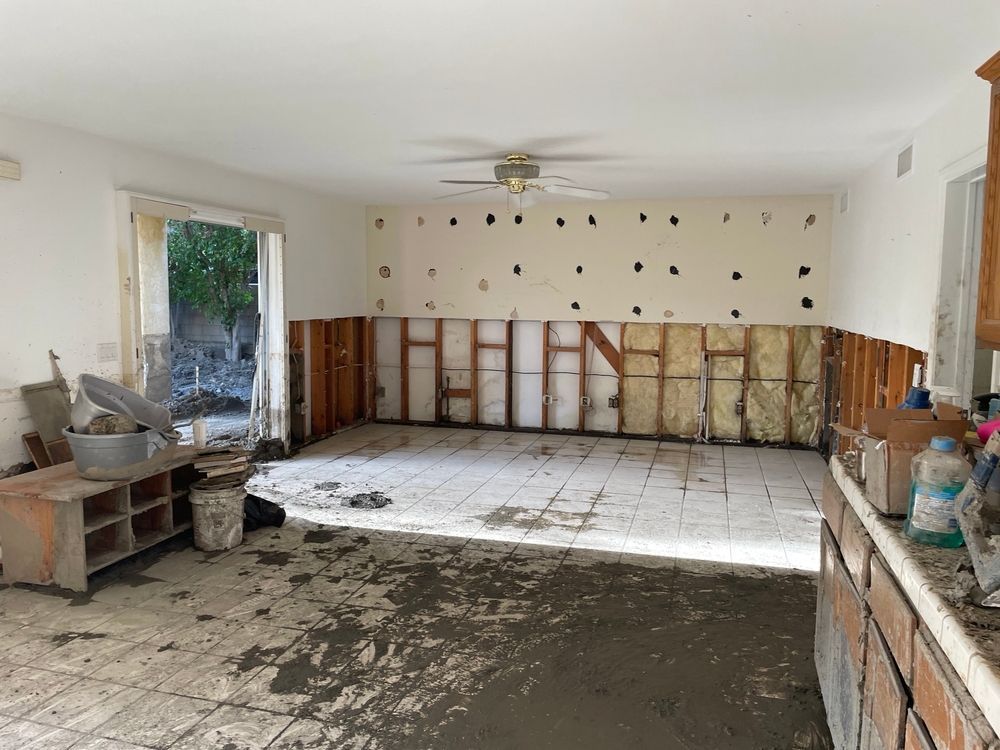
What Complete Reconstruction Includes
Reconstruction scope varies based on water extent and material saturation duration—minor damage may require only baseboard replacement and paint touch-up, while severe flooding can necessitate full-room rebuilding including drywall, insulation, flooring, and electrical fixture reinstallation. Interior painting follows drywall finishing and trim installation, using primer to seal new joint compound and topcoats matched to existing wall colors through paint sampling or homeowner selection. Subfloor inspection before new flooring installation confirms no soft spots, mold growth, or residual moisture remain in plywood or OSB sheathing—damaged sections are cut out and replaced with properly fastened patches that restore structural integrity and provide a flat, stable surface for finish flooring.
After reconstruction completes, you see rooms restored to their original configuration with walls smooth and painted, flooring installed level without gaps or buckling, and trim fitted tightly at corners and seams without visible nail holes or gaps. Paint matches existing finishes so repaired sections blend with undamaged areas, and flooring transitions are flush and secure where new materials meet original surfaces that were not replaced.
Reconstruction may include cabinet reinstallation, door rehanging, or fixture reconnection if water damage required removal of built-in features during drying. Electrical outlets and switches are reinstalled after drywall finishing, with cover plates fitted flush to finished wall surfaces. Complete reconstruction returns the property to move-in condition, addressing all cosmetic and functional repairs stemming from water intrusion and subsequent mitigation work.
Questions About Post-Mitigation Repairs
Property owners preparing for reconstruction want clarity on timelines, material selection, and how repairs integrate with insurance claims and existing finishes.
How long does reconstruction take after drying completes?
Minor repairs affecting one room may finish in two to three days, while whole-house reconstruction involving multiple rooms with flooring, drywall, and trim replacement can extend to two weeks or more depending on material availability, finish complexity, and the number of trades involved.
What if new flooring or paint doesn't match existing finishes?
Flooring is matched using samples from undamaged areas or manufacturer specifications for discontinued products, and paint is color-matched through spectrophotometer analysis of existing wall colors—Waco properties with custom finishes may require broader repainting to achieve uniform appearance across repaired and original sections.
Why is subfloor inspection necessary before installing new flooring?
Water-damaged subfloors may appear dry on the surface but still contain elevated moisture in deeper layers, or structural fasteners may have loosened during drying, causing squeaks or movement—inspection confirms substrates meet manufacturer requirements for moisture content and structural integrity before new flooring is installed.
How does reconstruction integrate with insurance claims?
Reconstruction estimates itemize materials, labor, and finishes required to restore damaged areas to pre-loss condition, supporting claims documentation and ensuring insurance adjusters understand repair scope—detailed estimates reduce disputes over coverage and prevent delays waiting for claims approval before work begins.
What reconstruction work can homeowners handle themselves versus requiring professionals?
Simple tasks like painting or baseboard installation may be manageable for experienced homeowners, but drywall finishing, flooring installation, and trim carpentry require specialized tools and techniques to achieve smooth, durable results—improper installation can lead to finish failure, callbacks, and insurance complications if repairs are not completed to code.
Lone Star Flood Restoration coordinates reconstruction scheduling to minimize disruption, completing one area before moving to the next and protecting finished work from damage during ongoing repairs in adjacent rooms. Contact us to review your property damage and develop a reconstruction plan that restores your home efficiently while meeting insurance and quality standards.
